
Importing a dog can look like a daunting option for anyone considering adding a Hokkaido Ken to their family and is often a step that most people are not willing to take, due to the increased complications, or lack of knowledge on what is necessary to import a dog into the UK. However, importing is crucial for the survival of the breed here in the UK, as without the ability to add new bloodlines to our extremely small gene pool, we are left with a future genetic bottleneck – where all individuals within the UK population will be related to one another. While importing might appear complicated to someone who doesn’t have prior experience, in general the process is currently quite simple and most breeders are happy to help you along the way. The BAHK is also more than happy to guide anyone interested in importing through the process and to help in any way that we can to try and ensure the future of the breed in the UK.
As of October 2025, a law is currently passing through parliament which will prohibit the import of dogs under the age of 6 months into the UK. Once this is passed into law (which looks to be likely at this time), it will make the importing process a lot more time-consuming and will mean that the future addition of new imports and bloodlines will become very difficult, or even an impossibility for many. In an ideal world, we would import as many dogs as possible before this law comes into effect, however, in reality, those of us already involved with the breed cannot import more dogs than we can reasonably care for. Thus, we encourage anyone seriously considering the Hokkaido Ken to think about whether an import might be a good fit for them.
Of course, there are things that must be taken into consideration before deciding whether an import is the correct decision. When importing from the EU (or any other ‘listed’ country as designated by the UK government), your puppy will be 15+ weeks old before they are able to travel home, so you miss a large part of that early socialisation period where puppies benefit the most from new experiences. In this case, choosing a good breeder who will begin this process and who is happy to keep a puppy for an extended period of time is very important. It may take a little more time for an imported puppy to bond with you, as they have had longer to get used to the home and routine with their breeder. The positive side of importing a slightly older puppy than you would pick up from a breeder in the UK, is that they often already have a limited amount of basic training, are more likely to settle overnight and will be mostly toilet trained before they come home. They should also have finished receiving all of their core vaccines and will be able to join you on your adventures immediately.

General Notes on Importing
When importing from the EU (or a ‘listed’ country) your puppy will need to be microchipped before or at the same time as their rabies vaccination.
Your puppy must be vaccinated against rabies by a veterinarian when they are at least 12 weeks of age and proof of this vaccination must be entered into the pet passport (or Great Britain Health Certificate). The microchip must be read and the date of implantation/reading must be prior to the date of the rabies vaccination for the passport to be valid.
A period of 21 days must pass after the rabies vaccination before the puppy is eligible to travel to the UK if they are coming from an EU or ‘listed’ country. Day 0 is the day the rabies vaccination is given.
(If your puppy is coming from a non-listed country then they will need to undergo a rabies blood test at least 30 days after the rabies vaccination and this sample must be sent to an approved laboratory to be tested, the result must show that the vaccination was successful. You must wait 3 months from the date of the blood test before the puppy is allowed to travel. If the vaccination was not successful, the puppy must have another rabies vaccination, followed by a further blood test after 30 days.)
Your puppy must be wormed against tapeworm and this must be recorded in their pet passport (or on their Great Britain Health Certificate, depending on where you’re importing from) by a veterinarian at least 24 hours but no more than 125 hours before crossing the border into the UK.
If you are travelling with your puppy, your name and address should be entered into the puppy’s pet passport (or on their Great Britain Health Certificate), as being the owner will make the process easier.
If you are not travelling with your puppy, you will need to fill out some other documentation and register the importation of the puppy on IPAFFS at least 1 day prior to travel, to prevent issues with customs. Your puppy will also need an EU Health Certificate, which the breeder will need to organise prior to transport.
If you are not travelling with your puppy, you may have to pay tax (VAT) at 20% of the purchase price of the puppy plus the cost of transport. This is not something we have experienced ourselves.
By Land
We always recommend travelling to collect your puppy if you are able to. It makes the process much easier when the owner is travelling with their puppy, as there is no need to register with IPAFFS or obtain an EU Health Certificate when travelling this way. All you will need is your puppy’s EU Pet Passport or Great Britain Health Certificate (note: this is different to the EU Health Certificate). This also gives you the opportunity to meet your breeder in person if you haven’t already, and to see the puppy with their mother.
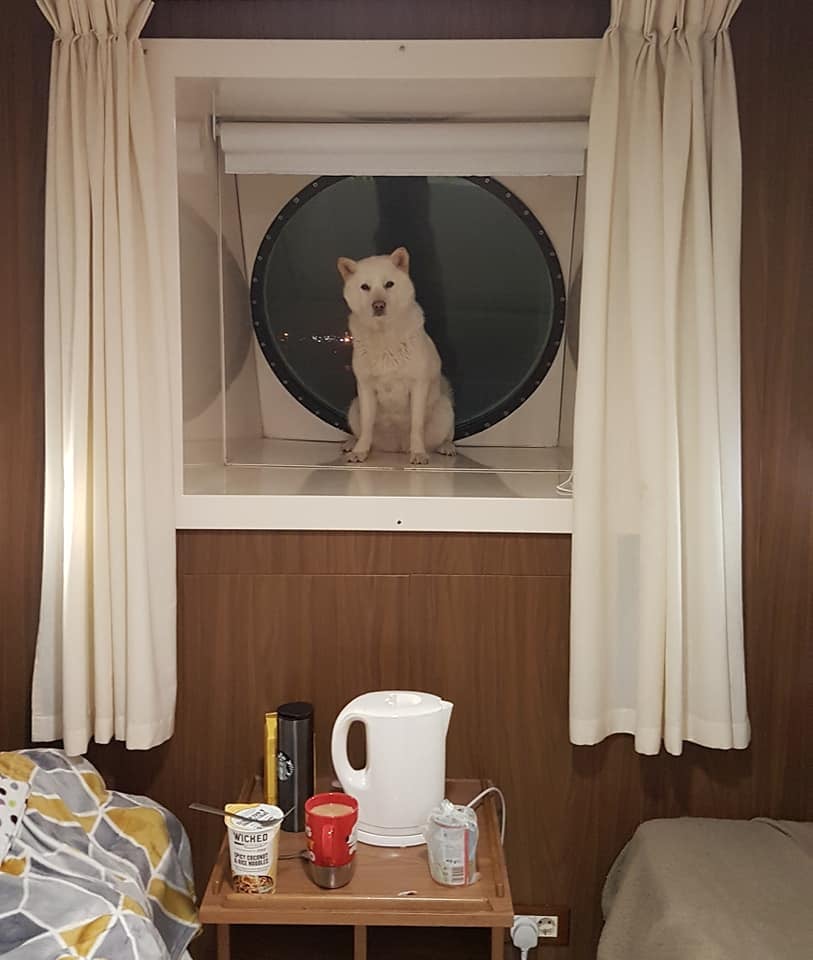
Travelling via Eurotunnel to Calais is quick, easy, not too expensive, and allows you to travel in your own vehicle with your puppy as opposed to travelling on the ferry where you are usually expected to leave your dog in your vehicle unattended, or take them down to a kennel area where they are also unattended for the majority of the time. Both Calais and Folkestone Eurotunnel terminals have a dedicated Pet Reception where they will check your pet’s documents prior to travel. Once this has been signed off, there are no further checks necessary for your puppy to enter the UK.
If it is necessary for you to use commercial pet transport, ensure that the company you choose is registered with DEFRA before handing over any money. In this case, we highly recommend a 1-to-1 transport, where your puppy is the only animal travelling with the transporter for the duration of their journey. Obviously this is a costly way for your puppy to travel, however, commercial transport, in our experience, puts a lot of stress on a puppy and travelling with multiple other dogs can lead to anxiety, fear or even reactivity, which can be detrimental to the development of a young dog in some cases. For commercial transport, where the puppy is travelling without the owner present, you will need to register with IPAFFS and ensure all of the relevant documentation has been completed prior to travel. Expect to pay anywhere from £750 – £3000+ for commercial transport.
By Air
Coming soon!
Important notes
Importation of animals to the UK is always changing, and it is up to you as the owner/buyer to do your due diligence to make sure your pet meets the importation requirements, as if they do not, they may risk quarantine or be refused entry into the United Kingdom. The UK may require disease testing for dogs from some countries before entry, to ensure your pet is clear of diseases. As of the 7th October 2025, all commercial canine imports from Romania must test negative for Brucella Canis, prior to entry into the UK. Please see the .Gov website for more information about which countries require various disease testing prior to entering the UK. The list may be subject to change, but it is not often reported nationally, so please keep yourself informed when importing dogs from abroad to meet the UK’s biosecurity rules.
 The British Association of Hokkaido Ken - BAHK